I just found this great video on self defense weapons. Unlike some of the other videos, this isn't just some long winded and boring listing of various weapons. Instead it really talks about the best kind of weapons to consider using AND talks a little about how to use them.
It's only 8 minutes long and it's very good. Anyway, check it out by Clicking Here Now.
And I'm doing a test relating to something with this post. If you could share this post with others on Google+ or Facebook that would be great and it would help me test something. I've never asked for this before but again, I'm simply testing something out. Please share this video with your friends that may be interested.
Monday, September 2, 2013

Friday, August 16, 2013
I think people have a misconception about TSHTF
I'm usually too busy doing my own survival stuff, running classes, backpacking, and all that to really pay too much attention to other bloggers or whatever in the survival space.
However I do on occassion read a blog post if something catches my eye. Now to be honest, things like "what to stock" is almost always something that I read because it helps me spot things that I might be missing or haven't thought of, or forgotten, or whatever.
I am regularly astounded however by some of the things people list either as a "necessary" bug out bag item or as something that should be stocked at your BOL.
THIS POST is an example of what I'm talking about. Mimeograph machines??? Are you serious?
Look, your BOL is a location that you stock for when something goes really bad. If your BOL is in the same goegraphic area and there's a natural disaster then your BOL won't be habitable anymore than your home is.
The truth right now however is that what is going on makes me think that your BOL is going to be much more useful should the US government declare some form of martial law. Given the positively insane amount of ammo that the Department of Homeland Security is buying (1.6 billion rounds at present, enough to wage full scale war for 30 years) combined with the ever growing purchases of food supplies by FEMA, purchased in a way that seems to be purposely interrupting the supply chain of emergency food for preppers ... I think it's a fairly likely scenario.
Especially when you figure that the US is currently buried in an ACTUAL yearly deficit running at 75% of GDP and an ACTUAL debt load rapidly approaching 200 trillion dollars, is going to mean that sooner or later the US is going to "pay" for the debt by currency inflation. That will lead to actual massive inflation and THAT is when the crack down will occur (I call it "Syria in the US").
Understand that a massive crackdown by the US government against the citizenry (effectively eliminating the "pesky" constitution) means several very important things.
1) The electrical grid is going to be closely monitored.
2) Various types and flavors of "law enforcement" personnel are going to be actively looking for people trying to be independent
3) Satellite technology means that any gun stashes that you THINK you have hidden are actually well known
Here's what I'm saying.
If (when really) TSHTF you need to be as invisible as possible. You need to be able to live without electricity or gas. If you think the government isn't going to use satellites to find homes being heated that aren't on a known electrical grid or getting fuel oil from known suppliers you are sorely mistaken.
Should the US government do exactly what it looks like its preparing to do, living anywhere in the US is going to be difficult no matter how great your BOL is.
In fact I'm going to go farther.
Unless the US decides to perform a wholesale takeover of both Mexico and Canada then I am rapidly coming to the belief that you need a BOL in both locations. I say both because which you go to will depend on a number of factors.
One in the wilderness of far north Canada (where bothering you is more trouble than its worth) or very deep into southern Mexico (area south of Monterey) where again its just not worth messing with you. Or better yet, go farther south still into Honduras, Belize, or El Salvador (all of which are beautiful by the way).
Each has its own pros and cons. If you go north, you can set yourself up with things like electricity and fuel oil and you can be exceedingly independent. The culture up there is a culture of independence, of making it on your own and bartering for the few things you do need.
However it is extremely cold and you had better know what you're doing to survive up there.
On the flip side, if you set yourself up south of Mexico you can go into the wilderness areas there an live quite comfortably thanks to a very temperate climate. However you have to understand how to survive the storms. The great thing about both places is that you can set yourself up with electricity generation using both solar and wind. (again, inside the US you'll be found if you do this and "brought to heel")
All of these things are why I keep saying the same thing ... all survival sooner or later is primitive survival. If you're going to go south of Mexico or into the Canadian Wilderness you'd better be fairly skilled in primitive survival.
SUMMARY
A BOL inside the US is now useful only for a natural disaster and THAT means that your BOL needs to be in a different geographical area than where you live. Of course actually getting to your BOL during or even shortly after a natural disaster is probably going to be difficult if not actually impossible.
Start thinking about setting up BOLs outside the US should the economy collapse and martial law is declared.
Monday, August 5, 2013
The ugly truth about survival that too many survivalists miss
I run more than a few free survival classes. In fact most of my survival classes are free. I rarely charge for them. It keeps me and my family in practice (my kids help out with them a lot, my wife isn't as interested) and we all get to meet some pretty cool people.
Anyway, my son was over trying to coach an older man about how to build a fire using a bow drill. After a few minutes (and seriously only a few minutes) of working the bow and the bit he throws the stuff down and says, "This is stupid! I don't need to know how to start a fire like this. My bug out bag has three different methods for helping me to start a fire and I have tons of stuff for doing it at my BOL. I'm done wiping myself out on this nonsense!"
So I stopped the whole class. I started by stating there were lots of valid approaches to survival and gave my "spiel" on that. Then I asked who agreed with the guy. Of the class of 18 people, four others raised their hands.
So let me tell you what I told that class...
ALL SURVIVAL SOONER OR LATER IS PRIMITIVE SURVIVAL
If we are working under the assumption that a major collapse of the world economies is coming and that we are all going to be needing our BOLs sooner or later ... then it is also true that sooner or later your fire starters or other fancy fire starting equipment is going to stop working because it will wear out, or run out of fuel, or whatever.
So if you are of the opinion that a long term collapse of the US is coming, then you must learn how to start a fire using primitive skills such as a bow drill (easiest) or fire plow (which requires A LOT of effort).
Better yet, learn how to start a fire both ways and be proficient in both.
In fact, starting a primitive fire using a bow drill by necessity means something else ...
That you know how to make cord and rope on your own. In fact in my opinion there isn't ANY survival skill more valuable than learning how to make "cordage". Without knowing how to do this, in a survival situation you are basically screwed.
Let me see if I can break this down for you.
The single most important resource (other than air) is water. You must have plentiful drinkable water if you expect to survive.
Sooner or later, your iodine tablets will run out, your filters will have ran their useful life, and the bulb on your UV lights will burn out.
That means boiling water, and that means starting a fire. Again, a bow drill fire is unquestionably the easiest way of starting a fire. The "problem" with the bow drill is that it needs some kind of cord or rope.
Now because I view coradage to be so important, I have a lot of it stored in various places.
The problem is that sooner or later, rope will fray and break, nets will need repair, and so on. That means if a bow drill is the easiest way of starting a fire (without fire starters) then you have to assume that sooner or later you're going to have to start that fire with cord you make yourself.
You need cord to make the bow, to start the fire, that boils the water (cooks the food, gives warmth, heat for cleaning/sanitation and on and on).
You see, I have what seems to be a unique view of survival.
In any survival situation, you have to think about obtaining plenty of clean water on an ongoing basis.
That has to be your first thought. But to be honest, clean water on an ongoing basis is most easily done with fire. So really, fire has to be the first thing you do in any survival situation.
A fire can be used to generate smoke that makes it easy to find you if you're lost or stranded or whatever.
It purifies water, generates heat, and on and on.
The minute you find yourself in a survival situation, probably your first thought needs to be to creating a fire.
Again, the easiest way of doing that is with a bow drill and that just might mean that you have to create your own cord (at least it will sooner or later)
GOING FROM SIMPLE SURVIVAL TO SUR-THRIVAL
I don't know about you, but struggling just to stay barely alive in a constant state of near starvation doesn't sound like a whole lot of fun to me :-D
If you want to "sur-thrive" instead of just survive, then you MUST know how to make cord and turn that cord into nets for fishing and trapping.
You MUST know how to weave baskets (also for trapping both fish and wild animals).
You also MUST know what natural fibers are available for clothing (beyond animal pelts) and how to convert plant fiber into some kind of cloth.
To my mind, the following are absolutely basic survival skills that any true survivalist MUST possess:
- How to create cord and rope
- How to a fire using a bow drill and a fire plow and do it safely so you don't start a friggen wildfire
- How to use your cord/rope to build a net for fishing/trapping
- How to weave baskets (fishing/trapping and of course just storing things)
- How to actually trap/net fish, animals, and birds
Now, different people are good at different things. Even though I know how to weave baskets ... honestly I kind of suck at it. My wife however is extraordinarily good at it.
That doesn't mean I just let the skill go for myself however!
The five skills listed above should be possessed by EVERY survivalist. With them, if the person that is good with something should be incapacitated due to injury or illness (or God forbid death) the entire group doesn't perish because one of what I call "lynchpin skills" is now gone.
EVERYONE should possess those five skills.
A very close #6 skill that in my opinion everyone should possess is self defense (and as I've said multiple times, I mean close quarters hand to hand combat self defense like you learn from Krav Maga or Brazilian Jui-Jitsu).
It's from here that we can talk about hunting as probably a #7 survival skill. However I don't see this one as something that everyone should have to do.
Wednesday, July 31, 2013
A really great question (sort of)
A guy on the Survivalist Board put up a post about rebuilding society with 30 people. Now personally, I think he and several other people overcomplicated the situation. Here is my response (including details on what I would do and how)
A group of 30 could survive ASSUMING a survival expert in the group that actually knows what they are doing AND DOESN'T FRIGGEN VIOLATE THE RULES.
I put that last part in all caps for a reason. The show on Discovery, "Naked and Afraid" puts two people supposed to be primitive survival experts into actual primitive survival situations. However with a couple of exceptions these people violate the rules and it ends up screwing them. So, I'm going to list out how a group of 30 people survive in a situation where their only resources are the clothes they are wearing.
First, the one primitive survival expert is ultimate authority PERIOD. Anyone not doing what the leader says is punished severely and instantly. Three times of disobeying the leader results in banishment if not death on the spot. The first person to disobey needs to be made a very brutal example of to prevent it happening again, ditto with the first person to reach 3 times disobeying. However if the first person to disobey (or two) are punished harshly enough then probably it won't happen again after that. A small group of just 30 and people get the message pretty quick.
Important rule ... NO ONE is allowed to evacuate bowels less than 300 feet from where ever the group intends to sleep, and said evacuation is a location decided upon by the leader (more on why later) and a hole must be dug at least one foot deep and then covered.
1) Fire.
Leader starts a fire IMMEDIATELY. Even if where they are isn't a good location for the group to pick as a "camp" a fire can be moved (any decent primitive expert should know how). In every survival show I've seen this is always the #1 mistake I see made. Start the fire soon.
Once the group is where they are going to make camp, for the love of all that's good and holy make it BIG. Cooking occurs on the outer edges not the middle. A fire that's 10 feet in diameter will keep away predators, generate smoke to keep away insects, keep up morale when things start to suck (and in the beginning they will), generate heat, and in the beginning give a way of treating water.
2 people are tasked with tending the fire, three more are tasked to obtaining fuel for it. (in the beginning this will mean finding stuff on the ground and even tearing branches off trees ... smoke is actually a good thing to ward off insects so some "green wood" is very desirable. Not only that, but sometimes just walking to the nearest tree and tearing thins off it is easier. Energy conservation is important at this stage.
2) Water.
EVERYONE ELSE works on getting a flow of treated water established. Water from the ground must be boiled ... PERIOD. Yes I know there are some exceptions but with 30 people generating enough water is going to require obtaining water from "untrusted" sources ... that means boiling.
Until there is a good "flow" of boiled drinkable water NOTHING ELSE matters. EVERYONE (except fire tender-ers and fuel gatherers) is put to getting this done.
Once it is done, probably 6 people will be put to keeping that flow of water (transporting water from the source to the fire and boiling, and adding to the number of drinking vessels).
Another huge mistake that I see being made by supposed "experts" is risking drinking running water from a stream. Any water that comes off the ground, out of the ground, and so on MUST be assumed to be bad and MUST be boiled. Water out of a plant doesn't have this rule but getting enough water for 30 people from plant sources is nearly impossible. You WILL need "ground water" from a steam or digging a well or evaporating sea water (not easy given zero resources). I can't stress this enough. Water from the ground must always be assumed bad and therefore it must be boiled. There are exceptions but you'd better be VERY confident in that exception. The entire group of 30 can be killed off quite quickly from drinking just a small amount of bad water. If not from the actual illness from the water itself, then because the illness has made the group too weak to obtain food. Boiling water doesn't take that long, it's why fire is the first item ... it's the first item exactly because the REAL most important thing is clean water.
3) Shelter. (notice it isn't food yet)
Leader would need to ensure that the components for enough shelters are created and built. All structures for 30 people would have final assembly done at once. This eliminates the arguments over who gets to sleep in the first constructed shelters. The 19 people not working on the fire or water are all working on this task. Done properly, within about 4 or 5 days the group has a very large fire, plenty of water to drink, and shelters from the elements. Many small shelters are better than one large shelter (they hold together better in heavy winds).
4) Food.
Branches are torn off trees and FILED (no tools yet) to points on rocks. Again, all 19 people not on fire or water duty are put to acquisition of food.
Most predators are likely going to be drawn to the area the group is using for bowel evacuation. 19 people, properly lead, should be able to relatively safely kill a predator (boar or cat).
If the main predator is snakes and "lizards" (crocs or aligators) then you do have to go get them but they are the "safest" to get assuming the leader knows how (crocs and aligators are safer ... snakes are too much work for the amount of food unless one is at hand). If the main predator is bear, that means fish ... DO NOT tangle with bear even (especially even) babies. Baby bears are given VERY wide space. A full grown bear will often not bother with humans at all ... except mothers who will violently protect their babies.
The leader, besides getting sharpened branches to the group also teaches people how to weave nets and create baskets, both of which are used for trapping fish, small game, and birds. In the early stages, these are pretty much always the primary source of food.
Again, snakes, kill them if they are close, but often snakes require a large expenditure of effort for the amount of food obtained so they shouldn't be "hunted". Fishing with nets, trapping fish/sea life with the baskets, trapping small game/birds with nets and baskets. In short, you need a lot of nets and a lot of baskets to feed 30 people. Again, all 19 people should be put to doing nothing but this for probably 2 or 3 days.
THIS WILL BE HARD. People will be hungry and will want to go off hunting with the first weapon. It's one thing to set a trap with the first net/basket. Especially fish traps. Set them as you go. Hunting should be done only in small groups with the leader while others are still working on baskets. Again, far less energy is expended in trapping/netting than in hunting which is why the early effort should be on baskets and nets NOT on hunting.
The nets need to be fairly large and "closely knit" (meaning small holes) and that takes time. In the right regions with boar and cat predators, these can be obtained by a few people (from the bowel evacuation area) to keep everyone going at first. Someone with decent primitive survival skill will know how to gut an animal with nothing more than a pointed stick. However without knives a lot of meat against the skin will be lost. Bones are OVERWHELMINGLY the best place to start with the creation of sharp tools however and bones from predatory animals are the best place to start as they tend to be very dense. From here, the 3 best people with the fishing and 2 best hunters are put to doing that now that there are sharp tools. They will also "treat" their kills/captures (gutting/skinning), The two people that tend the fire will do the cooking for everyone. Two people will at this point be put to gathering edible plants. At this stage calories from protein and animal/fish fats are going to be the most important. which is why the gathering doesn't occur till after protein sources have been found.
5) Improvement.
At this point there is a VERY good sized fire, plenty of water to drink (actually well more than that for soups, cleaning, and so on), only mediocre shelter, and enough food to prevent starvation. Bones are now giving the group tools to make fuel for the fire easier, the creation of more nets and baskets much faster and easier, and the acquisition of predators for meat easier. 12 people are now without "jobs". They will be put to the task of improving the shelters (ideally permanent "hard" structures made of brick), running water, "harder" tools (stone axes) and generally attempting to improve life. A good sized C shaped wall should be built around the camp to keep out predators and snakes. (after 5 to 10 years the wall can be pulled down as predators learn to avoid the humans with the pointy sticks ... however whether or not the wall is pulled down is going to be a factor of the primary weather. That C shaped wall can keep away a lot of wind if there are frequent storms (tropical or blizzard) which can make it easier to keep structures standing.
Hopefully the leader understands something about building vertical aquaponics systems. These generate a lot of fish, vegetables/berries/herbs, and don't require much effort so some people will be put to that. "Horizontal" gardens/farms require too much work for a group of only 30 and should be avoided.
Any "prey" animals will need to be captured so that domestication can begin. It's about having food sources brought to you so that energy doesn't have to be expended on capture/hunting on an ongoing basis. "animal husbandry" of wild animals can be a little tricky if the animals are penned too tightly. It's best if you can have a fairly good sized area where the animals are mostly penned by the land and there is a fairly good sized space. Shelters will be needed to be built for the animals as well AND they will need to be guarded against predators which means another shelter for the "shepherd on duty"
6) Moving forward.
In a group of 30 there will be pregnancies so any natural medicinals will need to be found, determined, and ideally made part of aquaponics as well or if it's a tree then locations identified. Hopefully someone in the group has some kind of understanding of midwifery.
THAT IS SERIOUSLY ALL THAT IS NEEDED for probably 20 or more years. The group is going to be too small to worry about larger "societal" things like law enforcement and judiciary and accountants. In the beginning the society would need to be very "communal" in that everyone works and everyone has what they need (water, shelter, food). It will be at the leader's sole discretion to determine if someone isn't pulling their weight and if they aren't ... they are gone.
Only 20 plus years into it will something more robust be needed and then likely it will evolve into a tribal system. The "elders" will take over the leadership of what will become a tribe.
Whether or not there is any expansion beyond a basic tribal structure is going to depend on the natural resources, competition with any other groups/tribes, and other things.
HOWEVER, for a very long time, the 30 people can make it. ASSUMING there is an actual primitive survival expert in the group that doesn't violate the rules trying to get from one place to another (not building a fire soon enough) or trying to build shelters for comfort before a stable supply of drinkable water is established. Shelter is not needed to keep safe from predators if a large enough fire is built. Not even boars will get too close to a large roaring fire.
If the group is without someone with primitive survival training AND expertise ... then that group is probably really screwed and not likely to make it a month or at most two.
BASIC LONG TERM PRIMITIVE SURVIVAL RULES
- FIRE FIRST. In any survival situation, build a fire as soon as possible. No kidding. Like right away. You can keep a fire going, you can travel with a fire. So if you aren't at a good camping location, build a fire right away and just move with it. Then, when you are at your Bug Out Location (BOL) you can make a larger fire.
- WATER. Water must be boiled before being drank. You need to be thinking of water by the end of your first day in a survival situation. By the end of your second, your fire should be used to boil water which you then drink. In other words, if you are travelling, then you travel for one day, then do nothing but acquire water the second day.
- SHELTER. Shelter makes it easy to survive if the weather turns ugly ... and it's only a matter of time before it does, and it will probably happen sooner than you like.
- FOOD. Trying to kill "prey" animals like deer or rabbit isn't very easy. Instead think trapping/snaring of fish and small game. It's generally a much better "yield" for the energy you expend. Doing this means nets and baskets for trapping (and if you're by an ocean, trapping fish is an instant "go to")
Everything else from here starts to get much easier.
However, in any survival situation, get a fire going and think about water RIGHT AWAY. Then shelter, then food.
If you acquire good skills in each of those areas for "primitive survival" you can pretty much survive anywhere. Learn how to create a "bow drill" to start a fire. boiling water is fairly self-explanatory if you have a good fire going (just don't let it go out!). Shelter requires knowing how to use vines or other materials as lashings for larger things and knowing how to create some sort of roof against rain. Trapping/snaring requires knowing how to use natural materials to create nets and baskets.
ALL of these skills are actually very easy to obtain and are not hard to do.
If you can't do every one of these things yourself then it should be a pretty high priority to acquire those skills. In a true SHTF scenario you may not be able to get to your BOL or it may be destroyed. Any prepper MUST know how to survive with few resources.
Tuesday, July 23, 2013
Survival (not) made easy
I have a generally low opinion of most of the survival shows out there. Yet interestingly I've found myself pretty attached to the show "Naked and Afraid" that's on Discovery Channel.
Now yes, it is true that the possibility that you will have to survive under conditions which you would be totally nude is astronomically remote, the reason I like the show is that it tests your knowledge under a "zero resources" scenario. You have to build, create, hunt, fish, forrage for EVERYTHING.
I also find it interesting that pretty much EVERY TIME someone violates some of the cardinal rules to survival they end up not making it.
Let me highly recommend that you watch the show for two reasons. First, it helps you go, "well that was stupid" when you see people doing something dumb on the show (so that you don't make the mistake). However there are a couple of things that I've seen on the show that I really liked and plan to add to my skill set (like the gal that weaved hats and all kinds of useful things out of local plants).
That said, let me go through a couple of cardinal rules to survival.
A human can live without food or shelter for often very long periods of time (two plus weeks without food, longer than that without shelter). However a human can live for about 3 days without water and can really only function for two days without it.
Therefore, in any survival situation water is always your first priority. However, DO NOT EVER drink water below 10,000 feet without treating it by boiling or iodine first. In a "true" survival situation where you don't have iodine, that means boiling the water for two minutes before you drink it.
THAT means that you have to build a fire AS SOON AS POSSIBLE to give you the ability to boil water.
Fire gives you several other benefits as well.
HOWEVER, if you can't create a fire to boil water then please know that if the leaves are green they probably have water in them. You can gather a bunch of leaves, stick them in your hand and crush them to drip some water into your mouth. It doesn't give you much, but it's better than nothing and can "get you through" until you can build a fire or do something else to obtain fresh water.
Now, unless you have a real fear of the fire spreading ... for crying out loud please build a fire large enough that you can use some pretty good sized logs in your fire. That will prevent you from having to constantly tend to it and if the flame itself goes out the larger logs hold heat and keep embers longer.
Once you have a method of obtaining water (and there are a number of ways of doing that and I will be covering them over the next few posts), and once you have a fire going, THEN think about shelter.
Once you have a way of getting water, have a fire, and have shelter, THEN get going on food. The method you use to get food will greatly depend on your specific location.
As always, hope this helps.
Now yes, it is true that the possibility that you will have to survive under conditions which you would be totally nude is astronomically remote, the reason I like the show is that it tests your knowledge under a "zero resources" scenario. You have to build, create, hunt, fish, forrage for EVERYTHING.
I also find it interesting that pretty much EVERY TIME someone violates some of the cardinal rules to survival they end up not making it.
Let me highly recommend that you watch the show for two reasons. First, it helps you go, "well that was stupid" when you see people doing something dumb on the show (so that you don't make the mistake). However there are a couple of things that I've seen on the show that I really liked and plan to add to my skill set (like the gal that weaved hats and all kinds of useful things out of local plants).
That said, let me go through a couple of cardinal rules to survival.
A human can live without food or shelter for often very long periods of time (two plus weeks without food, longer than that without shelter). However a human can live for about 3 days without water and can really only function for two days without it.
Therefore, in any survival situation water is always your first priority. However, DO NOT EVER drink water below 10,000 feet without treating it by boiling or iodine first. In a "true" survival situation where you don't have iodine, that means boiling the water for two minutes before you drink it.
THAT means that you have to build a fire AS SOON AS POSSIBLE to give you the ability to boil water.
Fire gives you several other benefits as well.
HOWEVER, if you can't create a fire to boil water then please know that if the leaves are green they probably have water in them. You can gather a bunch of leaves, stick them in your hand and crush them to drip some water into your mouth. It doesn't give you much, but it's better than nothing and can "get you through" until you can build a fire or do something else to obtain fresh water.
IMPORTANT NOTE: Always gather leaves from a single plant and "test" the water you will get by squeezing into your hand first. If the fluid that you squeeze out is any color other than clear or a little green DO NOT DRINK IT. This is especially true of the fluid is milky colored (a good indication the fluid is poisonous).So, always, always, always, worry about water first. In any survival situation you need water. Even if you have the ability to treat water (e.g. iodine) you want to build a fire as a very close second priority as it helps to keep the wild animals at bay.
Now, unless you have a real fear of the fire spreading ... for crying out loud please build a fire large enough that you can use some pretty good sized logs in your fire. That will prevent you from having to constantly tend to it and if the flame itself goes out the larger logs hold heat and keep embers longer.
Once you have a method of obtaining water (and there are a number of ways of doing that and I will be covering them over the next few posts), and once you have a fire going, THEN think about shelter.
Once you have a way of getting water, have a fire, and have shelter, THEN get going on food. The method you use to get food will greatly depend on your specific location.
As always, hope this helps.
Monday, July 22, 2013
I'm sorry, but it's THIS kind of crap that makes me think another economic collapse will lead to social upheaval as well
As a former special operations "guy" I have more insight into the kinds of stuff the US government collects. I have still yet more insight because of the specific group that I got my orders from.
However, every time I see stuff like this:
http://www.guardian.co.uk/world/2013/jun/06/us-tech-giants-nsa-data
It just drives me insane. The NSA has been effectively tapping, without knowledge of ANYONE, the direct servers of Apple, Google, and Facebook.
That means if you sent something privately from you to another person on facebook, that private message was tapped by the NSA. If you sent an email using Gmail then that private message too was tapped by the NSA.
I'm sorry but how in the world is that not a violation of the third amendment? Not that trifling things like the constitution is ever in the mind of a government bureaucrat.
Stuff like this is why I'm becoming ever more convinced that:
1) I firmly believe that we are headed toward a "double dip recession". Worse this "recession" is going to cause economic problems that made 2008 to 2010 look like a picnic
2) Because of a runaway fed the next recession is going to cause RAMPANT inflation.
3) Skyrocketing food prices, combined with a general dislike and distrust of the government (thanks to the government doing B.S. like this) is going to cause massive social upheaval.
And when I say massive ... I'm talking Syria level mayhem. Not exactly like that because we don't have the same religious "problems" that they do. But in some ways it may even be worse because the normal "allegiance" that keeps this country together is likely to disintegrate.
Now allow me to "revise and extend my remarks" that I just made.
1) The next recession is probably two or three years off
2) The following inflation is probably three or four years off
3) The social upheaval following that is probably five to seven years off (a longer delay because the government is certainly going to take steps to "soothe the masses" but I think they ultimately will fail).
Now please don't go thinking that I'm some "overthrow the government" type. That isn't the case.
I'm simply pointing the above out because
1) Learning methods to defend yourself are important and you should start now (again, actual self defense, your firearm is NOT actually a viable self defense weapon)
2) Setting up an AquaPonics system NOW, while the going is relatively good and you have time to experiment and learn is ABSOLUTELY something you should be doing. When food prices start to go flying through the roof you'll be able to absorb it without much difficulty.
In my opinion, self defense, and GROWING your own food (both protein sources and vegetables and such) are important to surviving what's coming.
Monday, July 15, 2013
Stock piling food effectively ILLEGAL

Now honestly, I didn't think this executive order carried enough weight to actually allow the president to declare someone a felon simply because they were prepared.
Further, the order so grossly and obviously targets the prepper community that I also didn't think it would hold up in court.
Well here's the thing ... possibly it won't hold up in court. That doesn't mean that some FBI agent won't still get to throw you in federal prison for God only knows how long until your case works its way through the court system if there is some kind of declared emergency and you are caught with large amounts of stock piled food.
That means that for all intents and purposes, right now, stock piling food is illegal. Well, not illegal, just not worth it. I mean, why stock pile the food if you're just going to have to turn it over to inept FEMA morons?
Now before I hear any foolish "pry it from my cold, dead, fingers" nonsense, lets be clear ... you can't fight the FBI. Head on out to Waco if you have any foolish notions that you can. And seriously, you shouldn't even TRY to fight them or even get around the executive order either. There's simply no reason to.
The executive order however mentions only "pre-packaged" foods. It leaves food growing in your garden alone. The problem is that most gardens don't really produce enough food to be adequate for a survival situation.
AquaPonics on the other hand is a different story. An AquaPonics system, grown "vertically" (meaning multiple things stacked" can produce ENORMOUS amounts of both food and fish that can keep you, your family, and probably your neighbors in good stead. (the system shown in the picture is a "horizontal" system with only two levels. There's better ways of doing it)
If things get really bad then your ability to produce food for barter and other things can mean the difference between simple survival and actually thriving during a full blown "shit has hit the fan" type of scenario.
The great thing about AquaPonics is that it's both easy and remarkably non-time consuming. Personally I'm not a good gardener or farmer. Neither are my wife and kids. In fact collectively we typically have a hard time keeping cactus alive in our house (seriously).
However the nature of how AquaPonics functions means that we have ZERO difficulty producing what amounts to a small mountain of food, most of which we can't even eat because our system "out produces" what we can consume.
The Bottom Line: If you're a prepper, it's time to stop stockpiling food and instead learning aquaponics.
Wednesday, July 10, 2013
The truth about survival self-defense

However, how much time I spend teaching survival techniques and tactics means that I get to interface with a lot of people. Because of how I do "testing" with what I teach it also means that I get to see how people are likely to react in live survival situations.
I've said this before in the past, and I'm going to say it again. If you are thinking of your firearm as a self-defense weapon you are probably making a HUGE mistake. Amazingly few people can kill a wild animal when they are half starved. Squeezing a trigger on a human you're looking right at is quite a bit more difficult.
The thing is, I see it ALL THE TIME. People who say they can go hunting and kill an animal even though they've never been. But when push comes to shove, killing another living thing IS NOT EASY.
Killing another human being is VERY hard. Why else do you think soldiers come back so mentally messed up? It's the killing of other humans that does it. It's the knowledge that every time the trigger is squeezed you're trying to kill someone.
Even soldiers who have spent their childhood with a parent out hunting in the woods and killing various and sundry wild animals STILL come back from having to kill people messed up mentally.
It is something not spoken about at all, but without exception, every single special operations soldier I have ever known (myself included) has got some issues from killing people. Yes, it's true that most of us do a very good job of hiding it, but the problems are still there.
So let me give you the truth about surviving ... and the whole "prepping" thing in general.
If you aren't actively studying a method of self defense then I honestly have no idea what you think you're prepping for. If you have a bunch of food and a starving mob figures out that you have it, do you really think they aren't going to try and take it from you? (which by the way, did you know that stock piling food is now ILLEGAL ... a post on that hopefully soon)
Not only that, actually practicing self defense is particularly important for women. In a SHTF situation your ammo won't last forever no matter how much you have, sooner or later it's going to run out. Then what?
Now, let me give you another truth ... most forms of "self defense" won't actually help you to defend yourself much in a down and dirty fight. for your life.
When it comes to self defense, the only forms that matter are Krav Maga (easily the best), Brazilian Jui-Jitsu (of particular benefit for women) ... and possibly Eskima (which is tough to find outside the Phillipines).
If you have a Krav Maga studio ... and I mean a REAL Krav Maga studio that has instructors licensed and trained through krav maga global ... then whether a man or woman this is without question your best option. The great thing about Krav Maga is it is AMAZING at teaching "situational awareness" as well.
If you can afford it, throwing in a couple of months of Brazilian Jui-Jitsu a couple of times a year is also advised as well, again especially for women.
If you can't defend yourself hand-to-hand then you aren't actually prepping for any sort of disaster. If you are a man and you aren't making VERY sure that the women around you can defend themselves then you are just asking to have survivors guilt if there is a disaster.
BOTTOM LINE:
Self defense is probably THE MOST IMPORTANT aspect of being a prepper. And please don't think of your firearm as an actual method of self defense. It probably isn't.
Tuesday, February 21, 2012
Getting Started With Survival

To understand how you should get started, you first need to understand the "hierarchy" behind survival. What things you should worry about first, second, third, and so on. I'm not going to talk about actual "buy this, avoid that"
First, let me tell you what The hierarchy (unless climate conditions are at extremes) is: Air, Water, Food, Shelter, Self Defense, and finally Medical care (unless there is a dangerous pre-existing problem in which case it moves upward as appropriate).
The hierarchy for times when climate conditions are at extremes is: Air, Shelter, Water, Food, Self Defense, and finally Medical Care (but again this item can move up as appropriate).
With that information as a basis, if you want to begin preparing, then start "close to home" with problems you are likely to face, and then move out to less and less likely issues from there.
I have a post where I talked about "Prep Levels" that was meant to put a sort of "DEFCON" (which stands for Defense Condition) kind of feel to preparedness.
It does you no good to have lots of weapons and ammo if you can't survive a simple grid failure without help due to lack of food and water.
So focus "close to home" ... or at the center of the graphic below ... and move out to each step from there, helping yourself to become more and more prepared.

Not only that, but it becomes easier to understand how to survive the specific situations you are likely to encounter and thus be much more ready for your specific type of survival scenario should you need it. What I am saying here is that instead of telling you exactly what you should and should not need, instead, I am hoping to help you to become is prepared in the best way for you without mucking up the waters telling you what works best for me.
My background and skills are different than yours, my strengths and weaknesses are different than yours. Therefore, the things I should do are by necessity different than what you should do.
If you have any questions about your specific situation let me know and I'll be glad to help.
Friday, February 17, 2012
Well, that was horrible advice!
Over at the Survival Blog, someone by the name of ChemEngineer wrote this post. Before I get into the post itself, let me say that you've probably noticed that I'm careful about the advice I give. The reason is that too much of survival is "situational"; meaning that what is the right thing to do in one instance will get you killed in another. That's why I pose so many questions in my posts to get you to consider what the best method will be for you.
 Anyway, I really liked that post. It was well written and well thought out, until I got to the part that said "Don't plan to live in a tent or take to the mountains to live off the forest. Bad idea."
Folks, what's a "bad idea" is trying to do something based on the advice of only one so-called "prepper expert" when he's giving opinions with no knowledge of the specific situation you may encounter. Did the writer know what he was talking about? Clearly he'd studied survival "some". Was his opinion about tents and mountains correct? That depends. In fact, it's the "that depends" that makes me say the person probably hadn't truly thought out various different scenarios which meant he wasn't much of an expert ... and that meant all of his opinions were therefore suspect.
If you've spent time learning about what plants and animals will actually be available to you, should you need to "bug out" then you can indeed "take to the mountains" or what ever. As for the thing about the tent ... that was just downright foolish. Many events don't last very long and staying in a tent for a week or two is no big deal, backpackers do it all the time and it's fun (being a backpacker I know this). I routinely will go on two week long backpacking trips where for the entire two weeks, if I don't have it on my back, I don't have it. I'm literally living a "bug out" type of scenario on a regular basis. Like I said, backpackers do this as a matter of course and few think of what they are doing as "practicing their survival strategy" and instead just think of it as having some fun and enjoying nature.
Not only that, but given my background I can speak with some authority about something ... people in groups can get real ugly real fast. If you live in an apartment staying there is a very bad idea if you are a prepper.
People in that complex almost certainly will come after you if there is even the slightest inkling that you have food and water and they don't.
Do you live in a house? That might possibly work IF you have "hardened" the house to prevent a swarm of people from just breaking through the walls. Again, the people in your neighborhood will come after you if any of them know you're a prepper. They'll come begging for your help at first "please give us some food, we're starving! Please help us, please."
They'll bring out their starving children (can you really resist helping a starving child you know you can help) and beg and plead. If that doesn't work they'll resort to an outright invasion of your home or apartment.
Here's the thing, in a Shit Hits The Fan (SHTF) type of event (natural disaster such as massive fire, flood, hurricane, etc) you do not want to put yourself into the situation of having to defend yourself if you can avoid it.
Trust me when I say this ... very few people can actually shoot and someone. TRAINED SOLDIERS have great difficulty doing it which is why it takes so many rounds to make a single kill and why so many come back with mental problems.
It is far better to bug out if you can to a location where you can hunker down and largely be invisible. However, remember what I said, that opinion is situation dependent. For any number of a variety of reasons that may not work for you.
In some places doing it can simply be very difficult (e.g. some parts of Denver the government has the ability to completely seal off the roads and leave you with no way out). If you have to stay where you are (roads washed out or flooding so bad you're stuck or closed and guarded roads) then you have to make the best of the situation presented to you.
In that instance, you want to appear to be gone, but you'll also want to make sure that what ever structure you live in can be "hardened" and you want to make sure that you can make it appear that no one is home.
However, the thing to understand is that if you are going to stay in a city environment then you may need to defend yourself from an incursion of people wanting to see if there is food in your home (particularly if any neighbors know you're a prepper). If you harden it, then it's possible that people will give up and move on to other, easier targets. Once everything else has been broken into, they won't stop and sooner or later they will get in unless you prove that you have the ability to absolutely and completely defend yourself ... and that will mean shooting people.
The best thing to do is to begin to do what you can to harden now and continually improve on it. Try coming up with ways you could break into your house even if it means breaking things (trust me, the mob won't care about that). When you find a weak point, make it strong. Keep working on it.
Not only that, but during Katrina not only was the grid down but there wasn't any water either ... if you stay in a city then you have to expect the possibility there won't be running water either. In that case, how will you obtain water in the middle of a city? Next to breathable air, water is the single most important resource. Without it you will die in a matter of days. If you're staying where you are then you will need quite a bit of stockpiled water. Remember, not just water to drink, but water to bathe as well.
Further, what about "human waste"? Again, with no running water what will you do when you have to go to the bathroom? You can always stockpile "grey water" to fill your toilet tank yourself. However, we're now talking about needing to stockpile a lot of water. A natural disaster that knocks out the water supply for two weeks would mean you needing at least 50 gallons of water just to flush toilets with! That's on top of an easy 100 plus gallons you're going to need to drink, cook, and clean with. Do you have some place that can handle the weight of 150 gallons minimum of water (that is a lot of weight)? Do you have some place to store it?
The Paradox Of Hardened Structures
Now there is another problem. The more "impregnable" you make where you live, should a mob come against your home they may wonder what's being hidden and go at you all the harder. It's why a decent stockpile of ammo at your home at nearly all times should be considered a must.
Prepping does you no good if a mob of people can just come and take it from you.
I bring this up because in any survival scenario you need to the pros and cons.
Should a mob come after what you have, how will you defend your food and your lives?
If you can bug out, how will you get there? Will you have water, food, and shelter?
Hope this helps.
Friday, February 10, 2012
Dry Fire: The little known secret of top shooters
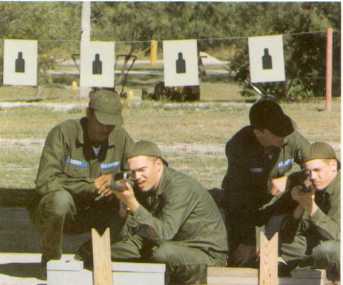
One of the best ways therefore to learn how to shoot better is to get an inexpensive red dot sight (any cheap one will do) and put it on a rilfe that has been "3 point checked" that it isn't loaded.
Put up a target at the end of the hallway, and aim at it. Watch how the red dot moves around, focus on keeping it still. (I'm not going to cover shooting mechanics in this post)
Now, squeeze the trigger slowly and watch how the dot moves. Cock and do it again, focus on zero movement all the way through the squeeze.
Do this laying down with the barrel supported, laying down with you holding it, sitting down, standing up, do it using a wall for cover.
Now do it while walking (crouched, step heel to toe). Focus on being able to hold your rifle with nearly zero movement in the dot of the scope still all the way until you hear the click of the firing pin ... no movement.
This is "target" practice that you can do at home without needing to spend a single cent on rounds.
Now, your rifle, unloaded will of course be a little lighter than it is with rounds in it. However, what you're after with this exercise is to give you the muscle memory to be able to fire with extreme accuracy without hardly thinking about it.
If you want to take this to another level, there are "lasers" that you can set into your barrel. These things put a laser dot on the wall and can make a neurosurgeon look like an epileptic. It's a way of learning to shoot with near zero movement to a whole new level.
If you want to learn to be a great shot, this is one way of getting that done because now you can practice much more often from the comfort of your home. You can improve your skill without really going anyway.
Hope this helps.
P.S. I know it's been quite a while since I last posted, but things got a little hectic. My apologies.
Monday, January 23, 2012
Getting ready ... while not actually getting ready?
One of the things that most concerns me personally about any sort of survival situation is my kids. Will they know what to do, how will they react, etc.
To help with this I've started talking to them in the car. What would you do right now if there was a car accident and I was unconcious and my phone shattered?

In other words, I play a lot of "what would you do if ..." type of games in the car.
Interestingly they seem to REALLY enjoy it and have gotten in on the action themselves and started bringing their own "what would you do if..." scenarios to the table.
The great thing about this is that it's getting them to think about and consider survival situations and scenarios and reason out possible reactions ahead of an actual event. Our constant talking about this has "cemented" their responses to certain things.
So, what would your kids do if ...?
Saturday, January 14, 2012
The problem with "make" instead of "stock pile"
Should there be some kind of natural disaster or something that forces me and my family to bug out (called the shit hitting the fan, or TSHTF for those new to this whole thing), I'm the kind of prepper that doesn't stock pile a whole lot. I want to grow, make, create, or hunt what I need.
There are a lot of pros and cons to this. On the Pro side, prepping this way is decidedly less expensive. Not only that, but learning how to create, I'm not even dependent on my specific bug out locations (BOLs) and could really bug out anywhere.
That said, doing things this way does have its Cons. The biggest of which to my mind is in "operations security" (OPSEC). In other words, gardens are visible. I live in ski country so my garden would need a green house during much of the year... which is still yet more visible.
Now, I have a plan for dealing with those things "as much as possible".
What I'm getting at here with this quick Saturday post is that there is no "perfect" or "right" way to prep and each method has its separate pros and cons. What is VITAL is for you to understand is the weak points are with even the METHOD you are using to prepare for some kind of disaster.
Knowing where you're weak can help you either fill those weak points or somehow use those weaknesses as an advantage.
Friday, January 13, 2012
Prep "Levels"
This whole "prepper" thing is, for some good reasons, focused on survival when things go really bad. Long term survival off-grid with the supply chains broken and mobs of starving rioters running the streets, and/or surviving a full blown bug out.
The fact of the matter however is that there are many more "normal" disasters that we are likely to face.
Prep Level 1: Simple Power Grid Failure
Lets face it, at some point this is going to happen. Can you communicate with others and let them know you're okay? Can your loved ones get to you? Do you have some alternate method of power generation to keep your refrigerator working and a radio running?
Seriously, out of all of the things we need to be prepared for this is the easiest one, but the most often overlooked unless you have a prep plan that allows for you staying at home.
Prep Level 2: Car Malfunction At Worst Possible Time
Now, we've heard of the Get Home Bag, and in the case of your car breaking down in the desert, IF you understand how to travel in the desert on foot, a Get Home Bag can literally mean you grabbing your bag, leaving your car, and doing it on foot. More likely, your "Get Home Bag" that you should keep in your car should be more considered a "stay alive in my car until someone comes by" bag.
The problem is that your Get Home Bag needs to change depending on where you are going to be traveling. The needs of someone in 120 Fahrenheit temps is obviously dramatically different than the needs of someone in sub zero temps.
Not only that, but of the two, the car break down during a blizzard is the worst scenario of the two as you could be stranded in your car for several days. Out in the desert it likely won't be more than a day. However, trying to stay in your car without it functioning in 120 degrees is problematic (your car would function like a giant greenhouse making it even hotter).
A quick word of note on this ... I really know what I'm doing in the snow and mountains. Despite that, If my car broke down during a blizzard and there was no one else around I would stay with my car. My "Get Home Bag" is packed for the mountains where I live. Survival chances during a blizzard drop dramatically when you leave your vehicle.
Prep Level 3: Localized Natural Disaster
The possibility of your power grid going down is a fairly likely event that most everyone will encounter sooner or later. Most of the country has experienced power grid failure for one reason or another that lasted multiple days and well into a week.
This is the first level where you need to worry about things like "Bug out bags" and "Bug out locations"
The possibility of your car breaking down is something most everyone has encountered though admittedly most of us break down on a major road and our cell phones work just fine. If you actually live in an area of extreme mountains or extreme desert then you already know that several people die every single year from cars breaking down and the person isn't prepared for it.
However, if you live somewhere that has tornadoes, a high possibility of torrential rain, hurricanes, "firestorms", or even earthquakes then you know that these events kill A LOT of people, often result in a break down in civil order, and generally things can get pretty ugly.
Katrina hopefully taught us all a valuable lesson regarding the government's ability to respond to something like this and how society will react.
Here is the problem with Localized Natural Disaster; with the exception of a hurricane, it can happen so suddenly that you can't get home to obtain your Bug Out Bag or if you can, your home won't still be there. This is where the "Get Home Bag" turns into a "Get To Your Bug Out Location" bag.
In my previous post I talked about "prepping your bug out location." Well folks, this right here is part of the reason for that. Your bug out location needs to be "ready enough" for your arrival even assuming you don't have your bug out bag ... because you might not have it. You may want to consider taking a look at the video below for assistance in getting your bug out location ready.
In fact, I would venture to say that unless the "localized natural disaster" is a hurricane, you stand a better than even chance of NOT having it. A hurricane is one of the very few massive natural disasters that gives fair warning of its arrival.
Those of you living in "tornado alley" are well away of how suddenly one of these puppies can take out a home. What if one goes through your neighborhood while you're at work?
What I'm saying is that your survival plan must include the possibility that you can't get to your actual Bug Out Bag!
For that matter, during that time of day it would mean children at school and possibly most of your other loved ones at work as well. What is your communications plan in the event of a breakdown in the usual communications system? Do your children know what to do? How will you communicate? I talked about communications in this post here.
Prep Level 4: Widespread Natural Disaster/National Breakdown In Civil Order
This is what most of us are actually prepping for ... and it is the least likely to happen. In most of the first world, governments are quite careful not to push their citizenry so far that breakdown like this will happen and most countries are geologically diverse enough that no natural disaster could be that wide spread (except near extinction level events like a huge meteor strike).
Part of the reason I don't worry about storing years of food is that the likelihood of the above is so astronomically remote. In the event something like the above happens, like I've said in previous posts, I'm much more about growing/hunting/creating what I need than I am with stock piling.
What's The Point Of These Stupid Levels Anyway?
Here's the thing. I wanted to put up this post about the prep levels to create some understanding within our community. In my opinion there is far too much planning for PL4 (prep level 4) despite the fact that few of us are actually likely to see it in our lifetime.
Now I will admit that with the current financial mess the world is in PL4 via massive civil order breakdown caused by an absolute collapse in the global financial system is becoming more likely.
However, it is still far more likely that you will have to live through a PL2 or PL3.
So let me ask you ... if your car breaks down can you live in it? If there is a PL4 do you have a "Get Home Bag" that will get you home or to your bug out location?
Here is my point with all of this.
Lets plan for the most likely survival events we are likely to encounter. Especially since starting with the most likely events we might encounter makes us more prepared for the PL4 level events.
The fact of the matter however is that there are many more "normal" disasters that we are likely to face.
Prep Level 1: Simple Power Grid Failure
Lets face it, at some point this is going to happen. Can you communicate with others and let them know you're okay? Can your loved ones get to you? Do you have some alternate method of power generation to keep your refrigerator working and a radio running?
Seriously, out of all of the things we need to be prepared for this is the easiest one, but the most often overlooked unless you have a prep plan that allows for you staying at home.
Prep Level 2: Car Malfunction At Worst Possible Time
- Your car breaks down on a lonely road during a blizzard in the middle of the night. It's well below zero, visibility is a few inches.
- Your car breaks down on a lonely road at noon in the middle of the desert. It's 120 in the shade and the heat causes disturbances in the air making it difficult to really tell what's up ahead.
Now, we've heard of the Get Home Bag, and in the case of your car breaking down in the desert, IF you understand how to travel in the desert on foot, a Get Home Bag can literally mean you grabbing your bag, leaving your car, and doing it on foot. More likely, your "Get Home Bag" that you should keep in your car should be more considered a "stay alive in my car until someone comes by" bag.
The problem is that your Get Home Bag needs to change depending on where you are going to be traveling. The needs of someone in 120 Fahrenheit temps is obviously dramatically different than the needs of someone in sub zero temps.
Not only that, but of the two, the car break down during a blizzard is the worst scenario of the two as you could be stranded in your car for several days. Out in the desert it likely won't be more than a day. However, trying to stay in your car without it functioning in 120 degrees is problematic (your car would function like a giant greenhouse making it even hotter).
A quick word of note on this ... I really know what I'm doing in the snow and mountains. Despite that, If my car broke down during a blizzard and there was no one else around I would stay with my car. My "Get Home Bag" is packed for the mountains where I live. Survival chances during a blizzard drop dramatically when you leave your vehicle.
Prep Level 3: Localized Natural Disaster
The possibility of your power grid going down is a fairly likely event that most everyone will encounter sooner or later. Most of the country has experienced power grid failure for one reason or another that lasted multiple days and well into a week.
This is the first level where you need to worry about things like "Bug out bags" and "Bug out locations"
The possibility of your car breaking down is something most everyone has encountered though admittedly most of us break down on a major road and our cell phones work just fine. If you actually live in an area of extreme mountains or extreme desert then you already know that several people die every single year from cars breaking down and the person isn't prepared for it.
However, if you live somewhere that has tornadoes, a high possibility of torrential rain, hurricanes, "firestorms", or even earthquakes then you know that these events kill A LOT of people, often result in a break down in civil order, and generally things can get pretty ugly.
Katrina hopefully taught us all a valuable lesson regarding the government's ability to respond to something like this and how society will react.
Here is the problem with Localized Natural Disaster; with the exception of a hurricane, it can happen so suddenly that you can't get home to obtain your Bug Out Bag or if you can, your home won't still be there. This is where the "Get Home Bag" turns into a "Get To Your Bug Out Location" bag.
In my previous post I talked about "prepping your bug out location." Well folks, this right here is part of the reason for that. Your bug out location needs to be "ready enough" for your arrival even assuming you don't have your bug out bag ... because you might not have it. You may want to consider taking a look at the video below for assistance in getting your bug out location ready.
In fact, I would venture to say that unless the "localized natural disaster" is a hurricane, you stand a better than even chance of NOT having it. A hurricane is one of the very few massive natural disasters that gives fair warning of its arrival.
Those of you living in "tornado alley" are well away of how suddenly one of these puppies can take out a home. What if one goes through your neighborhood while you're at work?
What I'm saying is that your survival plan must include the possibility that you can't get to your actual Bug Out Bag!
For that matter, during that time of day it would mean children at school and possibly most of your other loved ones at work as well. What is your communications plan in the event of a breakdown in the usual communications system? Do your children know what to do? How will you communicate? I talked about communications in this post here.
Prep Level 4: Widespread Natural Disaster/National Breakdown In Civil Order
This is what most of us are actually prepping for ... and it is the least likely to happen. In most of the first world, governments are quite careful not to push their citizenry so far that breakdown like this will happen and most countries are geologically diverse enough that no natural disaster could be that wide spread (except near extinction level events like a huge meteor strike).
Part of the reason I don't worry about storing years of food is that the likelihood of the above is so astronomically remote. In the event something like the above happens, like I've said in previous posts, I'm much more about growing/hunting/creating what I need than I am with stock piling.
What's The Point Of These Stupid Levels Anyway?
Here's the thing. I wanted to put up this post about the prep levels to create some understanding within our community. In my opinion there is far too much planning for PL4 (prep level 4) despite the fact that few of us are actually likely to see it in our lifetime.
Now I will admit that with the current financial mess the world is in PL4 via massive civil order breakdown caused by an absolute collapse in the global financial system is becoming more likely.
However, it is still far more likely that you will have to live through a PL2 or PL3.
So let me ask you ... if your car breaks down can you live in it? If there is a PL4 do you have a "Get Home Bag" that will get you home or to your bug out location?
Here is my point with all of this.
Lets plan for the most likely survival events we are likely to encounter. Especially since starting with the most likely events we might encounter makes us more prepared for the PL4 level events.
Prepping your bug out locations
Having at least two defined bug out locations is important. Having them ready for you when you get there is just as important.
A good bug out location will be fairly remote, a little challenging to get to, but even better, it will be easily defended.
Once you've identified one of these close to you and another in a separate geological area, you need to start getting them ready. When you first arrive, you may not have any food left if you've had to walk any distance. That means your bug out location should have some buried food cache at a minimum.
Let me say that a bug out location is some place where you will not have day to day control over and that does mean some risk. I typically recommend "cheaper" food cache items for that reason.
However, as M.D. Creekmore pointed out in this post on the survivalist blog, storing food isn't really enough. You should also store some simple twine. It's cheap and a lot of it can be stored in a very small area. Additionally, some clothes pins so that you can clean and dry clothes.
I talk a lot about building a fire, but what about if it's too windy and a fire could create a very real dangerous situation? Or if it's raining? You need some kind of way of cooking that is enclosed. Now the article I linked to talked about a "cooking grill" ... personally, I have a simple metal box with no bottom and a lid on a hinge. A grill sits on supports.
Now I can cook in the wind or rain by putting the box around the fire.
Now you can get real fancy like I did and build in a method for transferring some of the heat from the fire into any tents or structures you have.
Next is some decent cast iron pans and the largest "stock pot" you can find. The stock pot doesn't need to be cast iron or anything. Just large enough to allow you to make soup ... or use to help get things clean.
If you want to get really smart ... put as many seeds for your garden into your bug out bag. Keep in mind the shelf life of the seeds you store so that you can rotate/replace as needed. This way you can get your garden going once you get to your bug out location. Personally I don't like to store much of anything at my bug out location that can go bad over time. Food is my only exception to that rule (and I store things with 20+ year long self lives so I'm okay). Seeds are small and light enough that you can keep a large variety of spring, summer, and fall items
Next, the article I linked to above talks about lamp oil. Personally, I think storing something that flammable is a bit foolish. It would be far better to learn how to make oil from animal fats or even better from roots or other vegetation at your bug out location.
Here's the thing. As much as possible you want to know how to make/acquire the things you need at your bug out location instead of stockpiling them. Things like rope/twine (at least for me) are a giant pain in the rear to make. Clothes pins are the same way. Ditto with something to stop your fire from killing you (or going out).
One more thing.
My view on bugging out, or surviving when the shit hits the fan, is admittedly different from a lot of people. I personally don't store much food. Instead, I have ways of growing my own food.
In fact, with preciously few exceptions, I want to be able to make, find/gather, or grow everything I'm going to need should there be grid/supply failures.
That means I'm not stockpiling much. Instead of spending money on stockpiling, I spend it on education. Learning about plants, animals, migration patterns where appropriate.
I spend my time on training and scouting locations and routes.
Thursday, January 12, 2012
Communication when normal methods stop working.
Today the Survival Blog posted an absolutely FANTASTIC article. That article talked about intelligence and intelligence gathering.
I would like to address a part of that post that actually only got about a paragraph. (please understand that's not a critique of the post, like I said it was fantastic ... one post can't cover everything)
The section had to do with communications.
Let me ask you a question, TSHTF (the shit hits the fan) and your family is all over the place. Does your family know where to go and what to do?
If one of you is delayed how will you communicate?
Understand something, in MOST major disasters your cell phone won't work either because towers are down, there's no power, or the phone system is being overwhelmed.
So how does communications occur?
What is your back up communications plan?
What about any children? How will you communicate with them should there be a widespread outage of the phone networks?
This article, also on the survival blog gives a great method for handling this.
Plastic wrap? What for?
Semi-recently I gave a post about what I thought should be in your bug out bag.
I have to admit something now. The list of items that I thought should be in a bug out bag was purposely incomplete.
That list included the obvious things.
It did leave a couple of things out, and I'd like to talk about one of them now ... plastic wrap.
In my opinion plastic wrap is a VITAL bug out bag item. In fact I also include plastic wrap in my go bag as well (meaning that list was also incomplete).
The reason that plastic wrap should be included has to do with it's versatility. It can be used to keep water out of things (or away from it), it can be used to assist with water generation (I'll explain this technique in later posts), it can be used in first aid, and so on.
I go to a "club store" like costco or sams club and I've got pretty large rolls of the stuff in my bags.
Think about including plastic wrap in your bug out bag.
What do you think?
Wednesday, January 11, 2012
FIRE!
In this post I'm not talking about bugging out because of a fire, I'm talking about your bug out fire.
A couple of things on this.
First, as I've said in the past you need to have at least 3 methods of making fire NOT including the matches that you should also keep in your bug out bag. To me a match should be used only as a last resort.
Second, once you've built a fire during a bug out, it should not EVER be allowed to go completely out. It needs to stay burning. Having an actual burning fire of even a very small size means it's far easier to build a roaring fire for something should you need it (like an injury).
Having said that, keep in mind that during the day smoke can be seen from quite a ways off, especially in the mornings. Therefore, your fire should be allowed to get quite small once the sky begins to brighten so that any smoke is dissipated and not visible anymore only a foot or so above the flame.
A word of caution about keeping your fire burning. Doing that may mean keeping a "watch" awake at all times. If your group is larger than 5 or 6 people this will be fairly easy. If your group is smaller that will make keeping your fire burning constantly AND thinking about reducing the size of the fire before it can be seen as morning comes a bit challenging.
If your group is very small you may want to consider trying to combine with another small group.
Tuesday, January 10, 2012
Can you eat?
That's a big question I ask people that hire me to consult with them about survival.
Can you eat?
Most of the time I'm greeted with a blank stare wondering what I'm talking about followed by a, "yeah ... of course."
So I take them to their bug out location, take their food away and ask them to start eating at which point they mention that I just took their food away.
So let me ask you something. Let say a bug out becomes necessary. Worse, it becomes necessary for the bug out to last longer than the food you have in your bug out bag.
Can you eat?
Most people would talk about hunting. The problem is that once you start hunting you'll find that not long afterwards the prey you are hunting starts learning there is a predator and starts avoiding your area.
The truth of the matter is that if you truly want to survive you need to be able to READILY identify the edible plants and roots. Nearly everywhere plant life is far more abundant than animal or fish life. It therefore makes far more sense to think much more "gather" than it is to think "hunt."
So, what plants exist BOTH of your bug out areas? (and you do have two of them, a primary and a back up bug out location correct))
Can you easily go out to your bug out location and survive on little more than what you can gather from those edible plants?
On that note, let me say something. If you can build a fire, and if you're smart and your bug out bag includes things you can cook with, then you can make soups. They are easy to make and if you throw plenty of variety into them are often pretty tasty.
If you don't know what edible plants are available where your planned bug out locations are, now is the best time to start learning. Often it doesn't take much more than a few internet searches to learn this information. Now you just print it out, and make sure that you can quickly and easily identify the plants you can get food from (berries, roots, leaves, etc). MAKE SURE that you can do this even in fairly dim light!!!
Can you eat?
Most of the time I'm greeted with a blank stare wondering what I'm talking about followed by a, "yeah ... of course."
So I take them to their bug out location, take their food away and ask them to start eating at which point they mention that I just took their food away.
So let me ask you something. Let say a bug out becomes necessary. Worse, it becomes necessary for the bug out to last longer than the food you have in your bug out bag.
Can you eat?
Most people would talk about hunting. The problem is that once you start hunting you'll find that not long afterwards the prey you are hunting starts learning there is a predator and starts avoiding your area.
The truth of the matter is that if you truly want to survive you need to be able to READILY identify the edible plants and roots. Nearly everywhere plant life is far more abundant than animal or fish life. It therefore makes far more sense to think much more "gather" than it is to think "hunt."
So, what plants exist BOTH of your bug out areas? (and you do have two of them, a primary and a back up bug out location correct))
Can you easily go out to your bug out location and survive on little more than what you can gather from those edible plants?
On that note, let me say something. If you can build a fire, and if you're smart and your bug out bag includes things you can cook with, then you can make soups. They are easy to make and if you throw plenty of variety into them are often pretty tasty.
If you don't know what edible plants are available where your planned bug out locations are, now is the best time to start learning. Often it doesn't take much more than a few internet searches to learn this information. Now you just print it out, and make sure that you can quickly and easily identify the plants you can get food from (berries, roots, leaves, etc). MAKE SURE that you can do this even in fairly dim light!!!
Sunday, January 8, 2012
Are you ACTUALLY ready?
I know lots of people with bug out bags, ammunition, stock piled food and water, hardened homes, barriers to create additional perimeter security, stock piled first aid supplies, and so on and so on.
Do you know how many people that I know with a WRITTEN survival plan other than myself?
None.
Not a single person that I know personally has a written survival plan. Not a single one of those people with kids have talked with them ... let alone practiced what to do in the event of some kind of disaster or civil uprising.
So let me be clear about something.
As ready as you might think you are, if you don't have a written survival plan in place, then you aren't actually ready for much.
If you haven't practiced that plan, especially with any children, then you aren't ready for much.
Now, if you have children and they're younger than 8 or 10, and something happens while they are in school, then your plan for them might be something as simple as two or three places where they are to wait for you to get them.
However, if something happens and they are with you, then practicing what their role is, and what they are supposed to do in any of several different types of crises is important. It can mitigate some of the obvious stress when they know what they are supposed to do and how to do it.
Besides, practicing some of these things can actually be kind of fun. A bug out isn't much more than a weekend out camping.
However, every person needs to have a job (over the age of about 3) in a disaster. Every person needs to know they are helping and that they are contributing. That they are doing what they can, what they are supposed to, and that the other people in your group are doing the same.
Like I said, it'll keep stress levels down and your chances of making it through some sort of calamity much higher.
If you live in an older neighborhood with older homes, your local fire system probably can't handle a major fire that could go through your neighborhood like a book of matches.
What about a flood if you live somewhere that's possible, or earthquake, or hurricane, or even a massive (worst in recorded history) blizzard that shuts your city down for two weeks.
No matter where you live, some type of natural disaster is possible, and in every instance it is HIGHLY likely for that disaster to completely overwhelm the ability of local response to deal with it quickly, or the federal government to deal with it at all (e.g. Katrina).
More to the point, you probably know what kinds of natural disasters are possible where you live.
So, you should have a written plan of what to do, who is going to do what, and what the "chain of command" (e.g. who is in charge) should be.
This should be written, agreed upon by all involved, AND IT SHOULD BE PRACTICED.
Your plan should include contingencies for you being able to stay at your home, at an alternate "bug out location" fairly close to your home, AND the possibility that the disaster will be far ranging enough that you will need to bug out to a completely different geological region (if you live on the coast, moving to the interior, or if you live below sea level, moving well away and above it)
Your plan should further include how to handle civil unrest. Again, the plan should include what to do if you're going to stay put, move to a close by bug out location, or move to a much more distant location.
Your two bug out locations should be defined, and AT LEAST 4 different routes of getting to each of them well known and memorized by ALL members of your group older than about 5.
Yes, I said older than 5. Disasters can cause crazy and unexplained things to happen. Civil unrest can cause crazier and more unexplained things to happen. If your child is old enough to run, then they are old enough to run away from you at the WORST possible time (fear can quickly overwhelm reason in a young child). Should something happen, and they get separated from you, then it's a very good idea for them to know where they should go and how they should get there.
Like I said, having a written plan is a MUST if you have children and having that plan practiced is just as important.
So, do you have a plan?
Subscribe to:
Posts (Atom)